
Some Main Types of Geotechnical Drilling
In this blog post, diamond drill bit manufacturer HANGHUA will present the basics about the techniques and main types of geotechnical drilling.
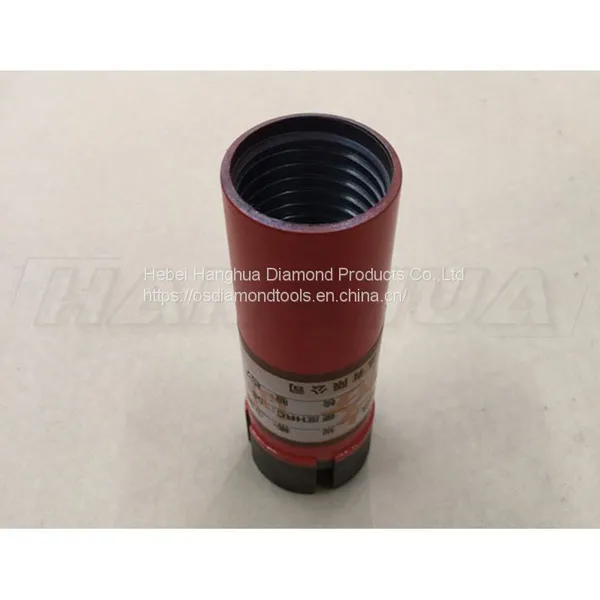
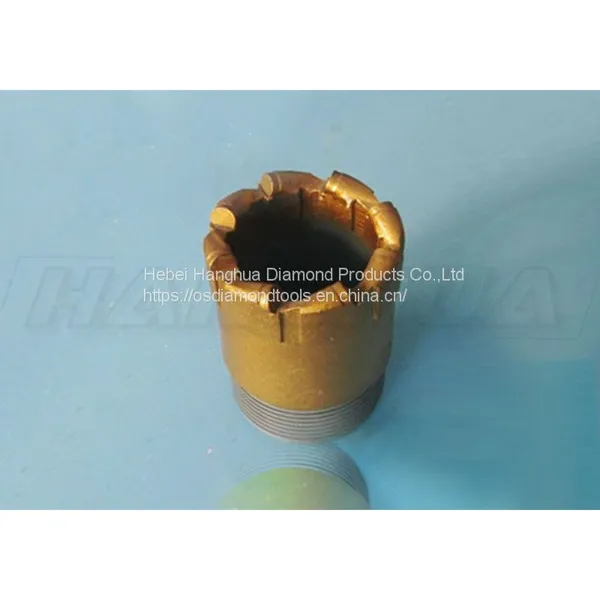
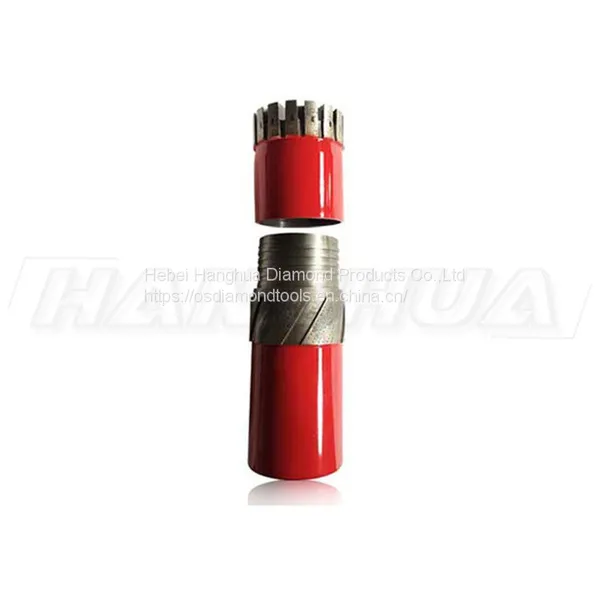
Cable coring and diamond coring are almost identical methods and the names can be used interchangeably. Both use a rotary core bit (with diamond coring, where the bit is diamond impregnated) to penetrate the formation. Core samples can be recovered without removing the drill pipe, which makes it an effective sampling method. With wire coring, a wire is used to bring the barrel to the surface, while conventional diamond coring uses a drill stem to bring it to the surface. One can choose a different drill bit design depending on the lithology hardness to improve drilling efficiency.
Benefits: Cable coring is a fast and efficient method of obtaining geotechnically acceptable (RQD) core samples. Drilling can be done at an angle.
Disadvantages: Cable coring is limited by the maximum core sample it can recover to approximately 3.27 inches. Softer karst formations can pose a challenge to the drilling process.

wire-Line Diamond Impregnated Bit
Hollow auger
As the drill bit rotates, chips are lifted to the surface by the auger threads to form the hole. As the name implies, the auger is hollow, which is how the hole is stabilized while sampling or installing the well. This technique is also widely used in the geotechnical market to collect Standard Penetration Test (SPT) data to understand soil density characteristics.
Pros: Hollow core drill pipe is a relatively inexpensive technique that is ideal for use in environments with sand, silt or clay.
Disadvantages: Not all formations are suitable for this equipment, as rejection may occur in rocky and denser formations.
The first type of drilling is the direct push technique or DPT. this is one of the most basic methods as it involves pushing a series of small drill rods directly into the ground, using pure weight or an impact hammer to advance it deeper. As it enters the subsurface, the drill cuttings are moved to the outside of the borehole, unless samples are being recovered.
Pros: DPT is cost effective and versatile when used in shallow, loose softer subsurface applications.
Disadvantages: DPT is susceptible to depth rejection. In the event of equipment rejection, other drilling techniques may prove safer, more efficient and more cost effective for the overall project.
They use a rotating bit suspended from the drill pipe to drill, grinding the geology as the weight of the bit is applied to advance the hole. Drill cuttings must be removed using drilling media.
Advantages: Rotary drilling allows for greater depth and borehole width than other drilling methods. It is also a versatile option, as there are several different types of rotary methods available to meet project needs.
Disadvantages: Unfortunately, rotary drilling generates a lot of IDW, which can be costly and difficult to manage, and IDW disposal can be expensive.
Hopefully, you now have an understanding of these major drilling methods. If there is anything else you would like to know about geotechnical drilling, please contact our experts.
Recently Posted
-
How to Improve The Service Life of Diamond Bits
January 10, 2022With the rapid development of modern industrial technology, diamond has increasingly become an important industrial raw material,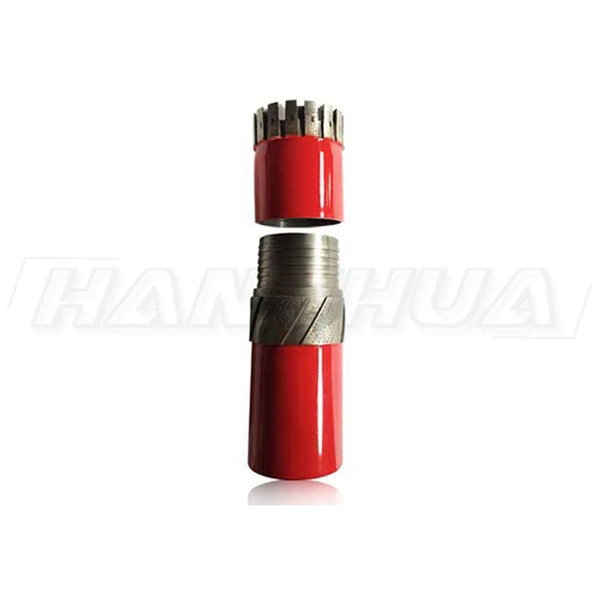 Read More
 -
Comparison: Diamond Core Bits and Carbide Bits
January 10, 2022Discover the distinction between diamond core bits and also carbide bits. We cover what can be done at each indicate eliminate the risk of making the incorrect acquisition.A number of variables will aid you to decide if you need a diamond or carbide coring little bit. The most important of these is which material you wish to reduce. To cut as well as grind hardened, ultra-high density materials such as granite as weRead More -
How to Sharpen A Dulled Core Bit
January 10, 2022Sharpening is also known as stripping. There is no easy, one-size-fits-all solution to sharpening a drill bit; it takes experience and knowledge. So in this blog I offer some advice and basic guidelines on how to sharpen your drill bits.Diamond-impregnated core bits are self-sharpening, which means they are designed to stay sharp throughout the drilling process. Under ideal conditions, as the matrix wears, new sharp diamRead More -
Four Best Geotechnical Drilling Tips and HANGHUA Bits
January 10, 2022In geotechnical drilling, accurate, efficient and high-performance operations are absolutely essential for optimal project execution. The ability to work quickly and efficiently is a solid advantage that can significantly reduce execution costs.Bit equipment for geotechnical drilling is a specific area of expertise for HANGHUA, so we have listed six of our best tips for conducting geotechnical drilling projects.&nbsRead More